Rather than delivering a feel-good album, American band Nothing provides the soundtrack for everything that is typically pushed aside. With a short history of decay, released on February 27th 2026, they unveil a creative endeavour that feels like a thought that keeps you awake at night. Between noise and emptiness, hope and resignation, the shoegaze veterans from Philadelphia have created an album that is less about listening and more about feeling. It is not merely an expression of emotions, but a space in which you are relentlessly at their mercy. And we surrender ourselves to it.
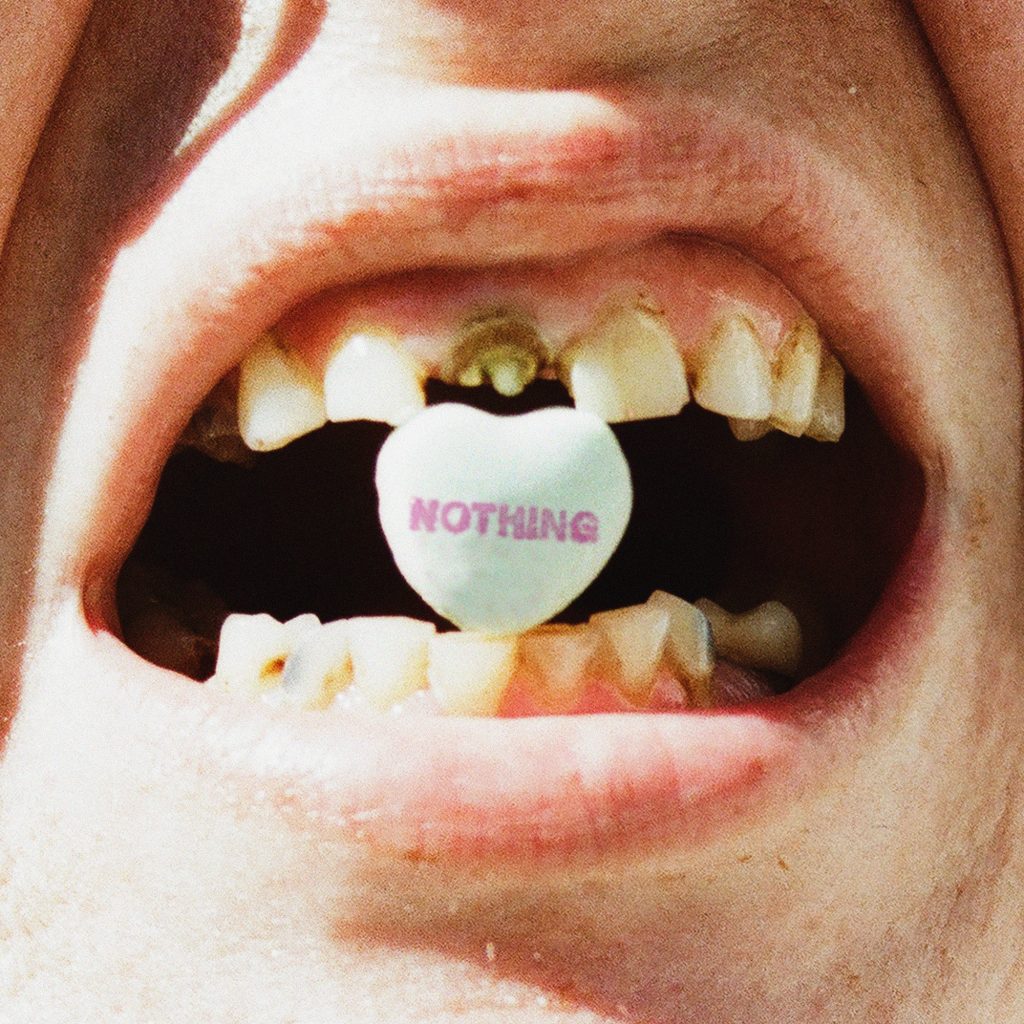
Shoegaze is not a destination, but rather a state of endurance. The genre has always refused to be clearly defined. Instead, it is distinguished by a frequently hazy sound aesthetic where guitars are heavily distorted through the use of various effects devices and layering. In particular, the experimental and style-defining use of effects pedals characterises the typical sound of shoegaze. Melodies dissolve, and voices recede into the background in a mystical, almost ghostly manner. This is not due to shyness, but rather to necessity, as they serve less as a means of conveying content than as an additional stylistic device and sound. With its shift from conventional song structures in favour of volume and an introspective, dreamy mood, shoegaze does not seek external attention, but consistently turns inward. And that is precisely where its impact lies. As a subgenre of rock music, it developed in the United Kingdom in the 1980s. Bands such as My Bloody Valentine were long regarded as pioneers in their field and created a masterpiece of the genre with Loveless. In the wake of Britpop, however, shoegaze gradually lost visibility: it was a genre that was too inward-looking, too abstract and elusive to be clearly identifiable.
Nevertheless, things have changed. Shoegaze is still going strong, continuing to demonstrate its inventiveness and vital impact on the music industry. With their latest album, Nothing offers the strongest evidence of this. They have always been boundary-breakers, true rebels, leaving their own unique mark on the shoegaze universe by refusing to conform to stereotypes and by imbuing the genre with their own, rawer sound. They have always been masters at enduring emotional extremes and making the complexity of human existence audible – from deafening rage to deep, paralysing sadness to the sober realisation of one’s own transience. Coupled with powerful soundscapes, Nothing has formed an unmistakable trademark.
More than half a decade separates the previous record from a short history of decay, a time shaped by pause, reconsideration, and the quiet unfolding of life between tours and collaborations. Life then retaliated. At times when the world suddenly stands still, there is no escape from looking inward. As the band’s central architect, Domenic Palermo confronts the past head-on with his latest work. Marked by serious illness, painful personal losses, gruelling hurdles and haunting memories, as well as the inevitable decline of one’s own self, a short history of decay is a relentless confrontation with time, life and human existence in all its facets. He himself describes it as the “final chapter“ – the conclusion of a story that began with the band’s first album and now comes full circle. What remains is an album of oppressive heaviness and fragile lightness at the same time – like a weight on the chest that only becomes noticeable when it is released.
It is one of the band’s most diverse and sonically rich compositions. At the same time, the album is marked by an unusual directness that inevitably forces you to pause and reflect, refusing comfort and settling for nothing less than truth. Never before has the band seemed so intimate. It also reveals a more mature perspective on the band, adding a facet to their work that previously remained unseen. With their latest work, Nothing reveals their more vulnerable, honest side. Some may say that the band’s strength – their overwhelming intensity – has given way to a more dreamy, sometimes restrained side. However, that’s exactly what makes this piece so unique. It feels authentic and coherent, conveying the emotions it deliberately brings to the surface. This very openness is what renders the album honest, sincere — and no less moving. Those expecting a relentlessly loud release driven by ecstasy and intrusion will not find it here. Instead, a striking diversity unfolds, revealing the band in its clearest form to date: a version that confronts the ruthlessness of the past, questions the present, and grapples with an uncertain future. With a short history of decay, the band delivers a thoughtful chapter in its evolution, one that ventures into new depths both musically and thematically.
Musically, the album builds on the band’s established sound of recent years: dense layers of distorted guitars, gritty textures, and emotionally charged melodies intertwine into an almost orchestral shoegaze soundscape. At the same time, you can sense that the tracks have a certain heaviness that goes beyond pure noise – as if Nothing wanted to not only sing about the overarching themes of decay, memory, and transience, but also make them physically audible.
The opener, ‘never come never morning,’ immediately sets the tone for the entire album: dark, almost hypnotic, Palermo opens the door to personal memories and biographical fragments. The lyrics revolve around memory as a fragile state, around a past that was never clearly tangible. Between nostalgia and disillusionment lies a quiet sadness that innocence may never have really existed.
In stark contrast stands ‘cannibal world‘, a shrewd and telling choice for the album’s lead single. It is among the record’s most energetic moments and delivers a forceful statement. Centred on the idea of self-consumption — both personal and societal — the song employs a language that is physical, raw, and almost aggressive. Driving rhythms, dense walls of guitar, and a near-industrial intensity converge, resulting in one of the most uncompromising tracks in Nothing’s discography to date.
The title track, ‘a short history of decay‘, forms the album’s emotional core and conceptual centre. Here, the motif of decay merges with a melancholic slowness, repeatedly pierced by eruptions of distortion. The song feels like an inner monologue about time, loss, and inevitable change. It reads like a record of inner exhaustion: reflective, conscious, but without hope for definitive clarity. Decay, in this context, emerges as a constant of existence.
With ‘the rain don’t care’, the mood suddenly shifts to a calmer, more contemplative tone. Like a grey veil, the rain settles over the outside world, while the gaze wanders inward and the tempo of the album noticeably slows down. Musically, the song reveals its dreamy, almost ballad-like side – carried by reverb and floating melodies. A deliberate contrast to the flow of the album so far. Indifference becomes the central motif: the rain symbolises a world that remains untouched by individual failure.
‘purple strings‘ stands as one of the album’s most sensitive and emotionally resonant moments. Introspective lyrics, delicately arranged strings, and restrained dynamics lend the track a fragile, melancholic beauty. It emerges as the record’s quiet highlight: a song about self-observation amid the constant noise of urban life and the attempt to get closer to oneself, despite detours and self-sabotage. The lyrics strike a rare balance between ironic distance and genuine vulnerability.
Gradually, the album gathers momentum once more. ‘toothless coal’ unfolds a dystopian atmosphere full of raw energy. Radical, angry, and almost nihilistic, the lyrics paint a picture of collective moral erosion. It navigates the fragile threshold between volume and restraint, while simultaneously presenting a modern, industrial-tinged reimagining of shoegaze in the vein of a classic à la Loveless, revealing one of the band’s most uncompromising sides.
Despite its title, ‘ballet of the traitor‘ resists any expectation of tenderness or restraint. Instead, the track unleashes a raw, edgy sound with distinct punk influences. Lyrically, it reads as politically charged and almost mythical, carried by powerful, uncompromising imagery. The track unleashes a raw, edgy sound with distinct punk influences.
The album’s stylistic breadth continues with ‘nerve scales‘, one of its most multifaceted tracks. Pulsating rhythms collide with an atmosphere that hovers between unease and devotion, rendering the song both unwieldy and unexpectedly accessible. Lyrically, it evokes a permanent state of alarm: questions displace answers, perception blurs, and nothing remains fully graspable. Strategically placed before the grand finale, the track serves as a crucial surge of emotional momentum.
The album concludes with ‘essential tremors‘, its most personal and exposed moment. Addressing the neurological condition essential tremor, which Palermo himself has lived with for years, the track feels raw and unshielded, his voice strikingly immediate and fragile. The involuntary tremors that thread through the record surface here without disguise, no longer obscured but deliberately foregrounded. Rather than concealing symptoms beneath layers of effect, the band elevates them into a defining stylistic element, which is an act of radical honesty that ultimately encapsulates the album’s core.
a short history of decay thus ends on a moving, intense, and dignified note. Taken as a whole, the album presents itself as an intimate, reflective, and, in many moments, courageous statement that takes the listener on a contrasting, sometimes unfamiliar, and deeply emotional journey.
Those eager to experience Nothing’s latest work firsthand will have the opportunity to do so this year — not only in Japan, but also on an extensive headline tour across North America and the United Kingdom.
Written by: Vanessa Svejkovsky
Edited by: Mandy Huibregtsen