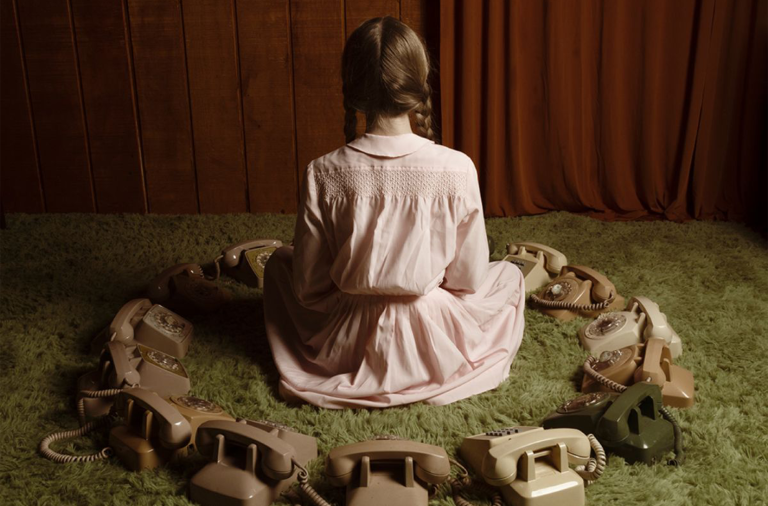
Hardly any other artist currently possesses the gift of turning the thoughts, emotions, highs and lows and all the challenges of an entire generation into words and melodies as precisely as Gracie Abrams manages to do. With her sensitivity, she brings those emotions to light that otherwise seem hard to grasp, the ones we’re often not even aware of ourselves. She becomes the voice of the subconscious thoughts of an entire generation. In doing so, she strikes a chord with her listeners time and again. She exudes a lightness, elegance, and coolness that are unmatched and have even influenced Olivia Rodrigo’s creative process. Therefore, it is understandable why her 2027 tour announcement is already creating a lot of excitement.

On July 17th 2026, the 26-year-old American singer-songwriter released her third studio album, Daughter From Hell. Even the title of the 16-track record hints at a darker, edgier successor to her last hit album, The Secret Of Us. The question is whether this is really a more dangerous Gracie, or whether the vulnerable person we’ve come to know just gets a sharper coat of paint.
At first, Daughter From Hell brings to mind an album full of anger, chaos, and confrontation. The title sounds like a liberating blow, a solid dose of female rage. But it quickly becomes clear that you shouldn’t be fooled by that image. The anticipated darkness turns out to be far quieter, more intimate and more reflective than expected. Rather than expressing her emotions through open rebellion, Abrams turns inward. Self-sabotage, fear of loss, failed closeness, guilt, being overwhelmed and the question of how much responsibility she herself bears for the recurring patterns in her life form the load-bearing pillars of the album.
This is where the album’s great strength lies. Abrams manages to portray her own inner contradictions with surprising precision. In doing so, she creates a space that enables listeners to identify with her and feel seen and understood by her. Her lyrics are authentic, self-reflective, and vulnerable, without getting stuck exclusively in self-pity or simple blame. That said, the expected anger is by no means absent from the album, it just presents itself differently than expected, rarely surfacing as loud outbursts.
The decision to make ‘Hit the Wall’ the first single was not only a wise strategic move, but it also put one of the record’s best tracks right at the beginning. The song demonstrates the album’s central themes especially well. It captures the sensation of blocking your own path, of avoiding intimacy by withdrawing and remaining silent, and thus causing the very rejection and loss you most dread. The wall in the title serves simultaneously as protector and aggressor. It keeps other people at a distance, protects from getting hurt and yet at the same time stops you from ever defeating your demons. Thus, ‘Hit the Wall’ depicts the paradox of being aware of your own harmful tendencies but unable to easily alter them, a situation that hinders many relationships among the “commitment-phobic generation.” This is rarely portrayed with such authenticity. On the other hand, the song has a catchy chorus that could become stuck in your head right away. It’s this combination of emotional depth and musical accessibility that makes it one of the strongest tracks on the album.
‘Death Wish’ sounds, at first, much lighter than its heavy title suggests. But there is a lot more edge hidden behind the soft guitar and Abrams’ hushed vocals. The anticipated rage does emerge, though not loudly, but in a controlled, cold way. The song functions as a confrontation with a manipulative, emotionally destructive person and appears to be a liberating blow. The restrained production works particularly well here: the calm makes the accusations feel almost even colder.
‘The Knife’ also makes use of this same contrast. The song moves at a steady rhythm that feels neither especially slow nor fast, and carries something almost soothing about it. Set against that is the dramatic, painful image of a knife lodged in the body and the constant haunting presence of a past relationship’s ghost, which turns up like a familiar companion in the passenger seat.
One thing becomes clear: throughout the album, Abrams draws on different perspectives. In some songs, she recognizes her own destructive behaviours; in others, she clearly names the other person’s wrongdoing. This reveals the album’s emotional maturity and marks an important developmental step in Abrams’ songwriting. She no longer processes only what others have done to her, but also takes a clear stance on herself and the pain she herself can cause. A self-assured song like ‘Men Like You’ thus becomes a significant element, one in which she sheds automatic self-blame and instead shows that self-reflection doesn’t mean taking responsibility for other people’s mistakes. On the other hand, in ‘Good Reasons’ or ‘Mews’, she struggles with the question of whether she also exhibits harmful behavioral patterns or whether she might reject stable closeness out of fear, reverting to self-doubt. It’s this complexity and contradiction that make the album feel authentic and allows listeners to build a connection to it.
With ‘Look at My Life’, ‘Humming’, and ‘Cold Goodbyes’, the album’s thematic scope also expands beyond the boundaries of romantic relationships to more fundamental questions of existence. Success, loneliness, the challenges of maturing, depressive thoughts and the pressure to maintain a facade and function externally are all discussed here. She processes the experience of feeling like a stranger in what’s supposed to be a dream life. ‘Look at My Life’ pairs this inner collapse with a catchy, dynamic sound, while in ‘Cold Goodbyes’, Abrams impresses with an unusually deep, almost smoky voice. ‘Humming’, by contrast, feels dreamy, light, and comforting, though it’s by no means a cheerful song. Rather, it can be understood as a reflection on growing up and the social uncertainty that comes with it.
‘Minibar’, meanwhile, brings a much-needed liveliness and momentum to the tracklist. It’s a considerably more playful, less serious and more self-assured song that invites you to sing along.
Amid all the heaviness, songs like ‘Afflictions’ and ‘What If It’s Right?’ function as glimmers of hope, once again underscoring the emotional complexity of the album as its great strength. Both songs raise the question of whether a relationship might actually offer support and stability, while at the same time acknowledging that this stability also brings fear and uncertainty. The latter song in particular impresses sonically thanks to the collaboration with Marcus Mumford. It comes across as restrained and atmospheric at first. The two voices blend well together and the acoustic elements also recall the soft warmth of Taylor Swift’s folklore.
The album is getting very mixed reviews. In terms of music, it doesn’t fully convince right away. With its gentle guitar sounds, rather slow tempos and frequent whispered vocals, the album creates an intimate atmosphere that suits smaller crowds particularly well. However, it frequently lacks authentic outbursts. While the thoughts and feelings are present, they often fail to emerge as the album’s title implies. The entire record gives you the impression that Abrams is holding the handbrake too tightly and that there is still more simmering inside of her. The carrying out is at times overly cautious, which can make the album feel somewhat monotonous and it certainly takes several listens before it really unfolds its effect. Even so, Daughter From Hell lacks the immediate hit potential its predecessor had.
Despite this criticism, Daughter From Hell is an emotional, multi-layered, and great album, by no means a bad one. Perhaps one shouldn’t be too blinded by the title and the at times dark imagery, or approach the album with the wrong expectations. Because the album doesn’t scream RAGE the way one might initially assume. But it nonetheless shows once again what an exceptional artist Gracie Abrams is, and why she’s one of the defining voices of her generation. Hardly any other artist manages to put inner uncertainty, self-sabotage and complicated relationship patterns into words this precisely, while turning personal experience into songs in which her audience can recognize themselves. The ‘daughter from hell‘ is no rebellious alter ego, but rather a more mature, more developed look inward. The album’s great thematic range, its shifting perspectives, subtle experiments in voice and production and impressive lyrical imagery make it an exciting step forward on Gracie Abrams’ career ladder, without fully revealing who she actually is. That’s something still left to explore in the future.
Written by: Vanessa Svejkovsky
Edited by: Marloes Joosen